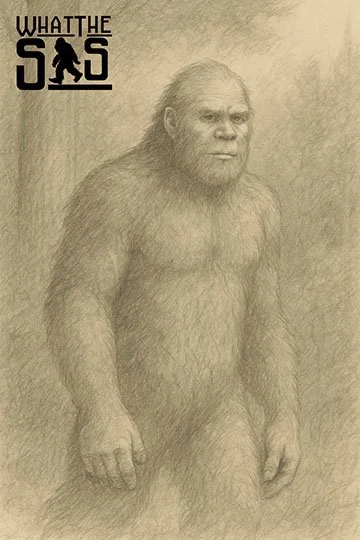
Sasquatch Behavior: Lone Giant or Group Species?
For generations, eyewitnesses, researchers, hunters, hikers, and storytellers have all contributed to one of the great questions in cryptozoology: Is Sasquatch a lone wanderer, moving silently through dense forests, or is he part of a hidden society—an elusive, intelligent species living alongside us in structured groups?
Bigfoot sightings across North America have shaped decades of folklore, outdoor investigations, late-night discussions around campfires, and field studies conducted by both amateurs and professionals. But behind the mystery lies a deeper biological question: What kind of creature could remain undiscovered in heavily explored wilderness for so long?
If Sasquatch exists, then his ability to evade humans is extraordinary. But such evasion could be a product of two very different survival strategies: solitary movement or group-based cooperation. Both exist in nature. Both produce elusive, highly adaptive species. And both tell completely different stories about Bigfoot’s behavior, intelligence, and evolutionary history.
This investigation explores the strongest evidence on both sides—ecological clues, Indigenous teachings, eyewitness patterns, primate biology, environmental science, and the subtle hints left behind in the wilderness. Whether Sasquatch is a solitary creature or a social species remains one of the most compelling mysteries in cryptid research.
And the answer may reshape everything we think we know about him.
The Classic Image of Bigfoot: The Lone Wanderer
Most people imagine Sasquatch as a solitary giant—massive, powerful, quiet, and eternally alone. The classic Patterson–Gimlin footage captures a single figure striding through Bluff Creek, California. Many eyewitnesses describe lone individuals crossing roads, watching from ridgelines, or slipping silently through dense forest.
This solitary image is reinforced by several factors:
1. Most sightings involve a single creature
Nearly every encounter in the last century has described one Sasquatch—not pairs, not groups.
2. Lone footprints are common
Reports overwhelmingly feature isolated trackways.
3. Solitary movement reduces detection
A single individual can travel quietly, hide quickly, and move unpredictably.
In ecology, large omnivores like bears often roam alone because:
• Food sources cannot support groups
• Territorial range is large
• Solitary movement reduces conflicts
If Sasquatch is similar in size and metabolism, solitary behavior makes biological sense.
But the story doesn’t end there.
The Case for a Social Sasquatch
While most publicized sightings show lone individuals, an equally compelling set of evidence suggests Sasquatch might be social—and possibly highly intelligent.
1. Reports of Family Groups
Though rare, some encounters describe:
• Adults walking with juveniles
• Two or more individuals moving together
• Smaller creatures observed near larger ones
A handful of extremely credible witnesses claim to have seen groups of three to seven Sasquatches moving across clearings or interacting near forest edges.
These reports, though less common, cannot be ignored.
2. Tree Structures That Appear Constructed
Many researchers document:
• Teepee-like structures
• Lean-tos
• Stick formations
• Archways
• Woven branches
Some of these formations resemble:
• Play structures for young individuals
• Territory markers
• Primitive shelters
• Communication symbols
The collaborative nature of these formations hints at group behavior.
3. Vocalization Patterns Suggest Communication
Sasquatch sounds reported in wilderness areas include:
• howls
• whoops
• knocks
• whistles
• chatter-like vocalizations
These resemble known forms of primate communication—especially long-distance calls used to coordinate groups.
If Sasquatch communicates like great apes, he may live like great apes.
The Primate Comparison
To understand Sasquatch behavior, primatology offers a critical lens. Known primates fall into two categories:
Solitary Primates
• Orangutans
• Many prosimians
They move alone, gather only to mate, and survive through independence.
Social Primates
• Gorillas (family groups led by silverbacks)
• Chimpanzees (large communities)
• Bonobos (tight-knit groups)
They cooperate, share responsibilities, and raise young collectively.
If Sasquatch is a relic hominid or an unknown great ape, his behavior may mirror one of these strategies.
Solitary Sasquatch would resemble: Orangutans
• Wide-ranging
• Secretive
• Rarely seen
• High intelligence
• Minimal group interaction
Social Sasquatch would resemble: Gorillas or early hominins
• Family groups
• Shared foraging
• Cooperative protection
• Structured social roles
Both possibilities align with eyewitness accounts.
Environmental Science: What Would the Habitat Support?
Sasquatch sightings occur in regions with:
• dense cover
• abundant water
• moderate temperatures
• seasonal variety
• large prey sources
• plenty of edible vegetation
Studies show these environments could support:
Solitary giants
Large omnivores like bears thrive alone in similar ecosystems. One Sasquatch could plausibly move between watersheds and valleys without risking starvation.
Small groups
A family unit of 3–6 individuals would also be feasible, similar to wolves or gorillas, if they had:
• a wide enough home range
• seasonal movement patterns
• strong foraging strategies
Large communities, however, would leave undeniable trace evidence.
This points toward Sasquatch living alone or in small, tight family groups—rarely in large bands.
Indigenous Knowledge: Sasquatch as a People, Not a Creature
Native American oral histories describe Sasquatch not as a solitary animal, but as a people—intelligent, social, and spiritually connected. Many tribes have terms describing “the forest people,” “the watchers,” or “the tall ones.”
Key themes include:
• Sasquatch lives in groups
• They avoid humans intentionally
• They protect certain parts of the forest
• They communicate across long distances
• They raise young collectively
In these traditions, Sasquatch is far more social than modern sightings suggest. They behave like a hidden, culturally complex population rather than lone wild animals.
This is critical, because Indigenous knowledge is often rooted in thousands of years of observation.
A Closer Look at Solitary Sasquatch Evidence
Solitary behavior may explain:
1. Rare sightings
One creature is easier to hide than many.
2. Lone trackways
Multiple individuals would leave multiple sets of tracks.
3. Limited vocalizations
Social species are typically louder and more frequent vocal communicators.
4. Minimal physical evidence
Large groups would leave bedding, food remains, nesting sites, trails, and waste.
5. Nighttime movement patterns
Solitary animals often favor stealth for survival.
Science supports that solitary giants could remain unseen for generations, just as snow leopards, giant forest hogs, and lowland gorillas once did.
A Closer Look at Social Sasquatch Evidence
Social species leave subtle but important signs:
1. Complex Structures
Some tree structures appear too elaborate for a single builder. Cooperative building is common among intelligent mammals.
2. Multiple Vocal Types
Long-distance calls, mid-range whoops, territorial knocks, and chatter indicate language-like variation.
3. Juvenile Sightings
Though rare, sightings of smaller Sasquatches suggest reproduction—and reproduction suggests social structure.
4. Coordinated Movement
A few reports include synchronized behavior:
• Two individuals flanking a hiker
• Large creature retreating while smaller ones hide
• Multiple silhouettes at different elevations
This indicates group survival strategies.
5. Food Sharing Behavior
Cache sites—suspected storage spots—exist in several forests. Some appear maintained, not merely scavenged.
Why Sightings Rarely Show Groups
If Sasquatch is social, why don’t people see them together?
Reasons include:
1. Group awareness
One Sasquatch observes while others hide or retreat.
2. Division of roles
Adults may lead humans away from juveniles.
3. Natural camouflage
Even a group of five could vanish into brush if trained to freeze.
4. Human movement patterns
We walk loudly and predictably; Sasquatch anticipates us and adjusts accordingly.
5. Survival evolution
Generations of avoiding humans may have shaped them into expert hiders.
Groups don’t need to stay visible to function socially.
The Hybrid Theory: The Most Likely Explanation
The strongest evidence suggests a hybrid model—Sasquatch is both solitary and social, depending on:
• season
• resources
• reproductive cycles
• age of individuals
• geographic region
• human presence
• ecological pressures
This mirrors real-world animals like:
• mountain gorillas (groups with roaming males)
• bears (solitary adults, social mothers with cubs)
• wolves (sometimes solitary, sometimes pack-bound)
• orangutans (semi-solitary with social overlap)
In this model, Sasquatch may:
• Travel alone most of the year
• Join small family groups in mating or breeding seasons
• Use temporary gathering places
• Maintain distance but share language and culture
• Avoid large gatherings that risk detection
This explanation fits nearly every reported pattern.
What If Sasquatch Intelligence Determines Social Structure?
If Sasquatch is highly intelligent—similar to early humans or great apes—then his social structure may be fluid and dynamic.
Intelligent species adapt behavior based on:
• environmental dangers
• resource shortages
• human encroachment
• predator presence
• group needs
• geography
This flexibility could explain why some regions report family units while others show lone wanderers.
A highly intelligent species may choose solitary or social life strategically, not biologically.
The Final Question: What Does Sasquatch Need to Thrive?
The answer reveals everything about social vs. solitary behavior.
A solitary Sasquatch needs:
• large home range
• stable food supply
• stealth
• deep environmental knowledge
A social Sasquatch needs:
• shared resources
• group communication
• reproduction strategy
• cooperation
Sasquatch sightings suggest both sets of needs are met. That means Sasquatch lives a dual existence—strategic, nuanced, and highly adaptive.
The Mystery Persists Because Sasquatch Might Be Both
After examining eyewitness reports, ecological reasoning, Indigenous teachings, primate comparisons, behavioral science, and wilderness patterns, the answer becomes clear:
Sasquatch may not fit neatly into “solitary” or “social.”
He may be a creature capable of living both ways—depending on what survival demands.
This makes him harder to detect, harder to study, and infinitely more fascinating.
He could be a lone traveler in winter, a guardian protecting juveniles in spring, and a quiet member of a small family unit in summer. He may move with others yet remain unseen. He may understand humans are dangerous and scatter when we enter the forest.
The mystery remains not because he hides, but because he adapts.
Sasquatch may walk alone.
But he may also walk with others—just not where we can follow.
And that may be the greatest clue of all.