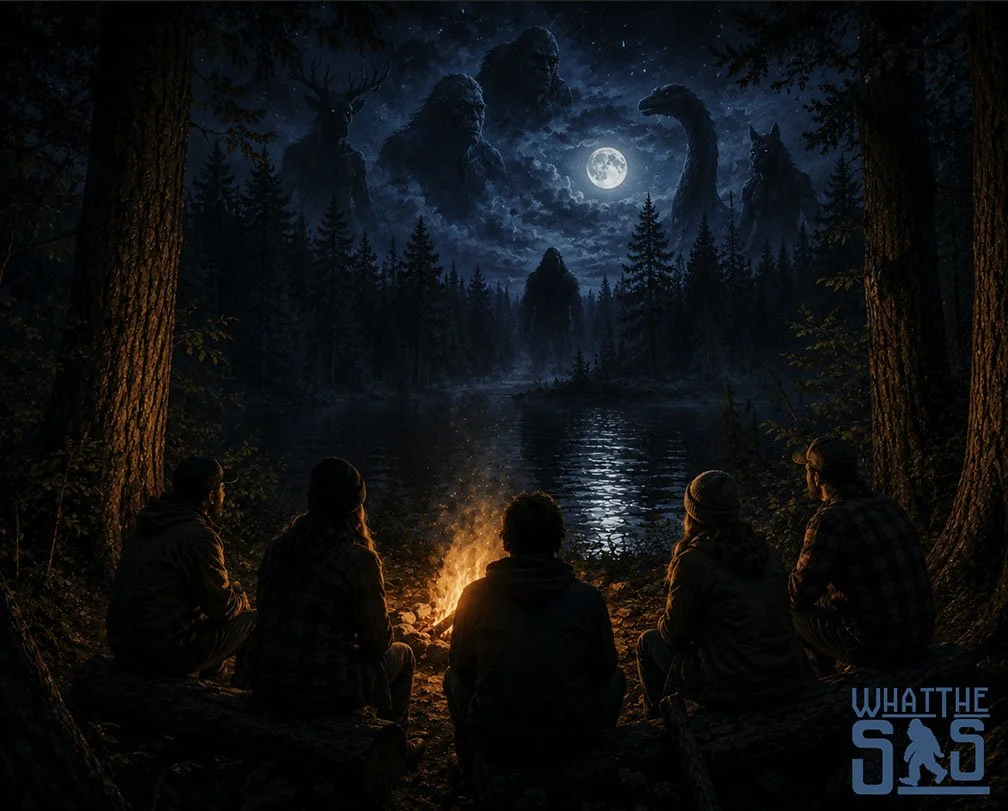
Why Humans Secretly Want Monsters to Be Real
The Strange Comfort of the Unknown
Humans claim to fear monsters.
We tell stories about mysterious creatures lurking in forests, hidden beneath dark water, moving through swamps, or watching from mountain shadows. We warn children about creatures in the woods. We create horror movies filled with terrifying beings. We talk nervously about unexplained sounds at night and the possibility of encountering something unknown deep in the wilderness.
And yet, despite all that fear, people remain deeply fascinated by monsters.
Not just fictional monsters.
Real ones.
Or at least the possibility of real ones.
Bigfoot.
Sasquatch.
The Loch Ness Monster.
Dogman.
Mothman.
The Jersey Devil.
The Fresno Nightcrawler.
The Skunk Ape.
Cryptids, mysterious creatures, unexplained phenomena, paranormal entities, and hidden beings continue captivating millions of people across generations and cultures.
That raises an important question:
Why?
Why do humans secretly want monsters to be real?
The answer is more complicated than simple fear or entertainment.
Because monsters represent something powerful.
Mystery.
Wonder.
Danger.
Possibility.
The unknown.
And perhaps most importantly:
The idea that the world is still bigger than human understanding.
In an age where maps cover nearly every landscape and technology reaches into even the most remote wilderness, monsters preserve the possibility that something remains undiscovered.
Something hidden.
Something outside our control.
And deep down, many people desperately want that to be true.
Monsters Make the World Feel Larger
Modern life often feels heavily explained.
Satellites map forests.
Science identifies species constantly.
Phones provide instant information.
Technology tracks nearly everything.
The unknown feels smaller than it once did.
But monsters challenge that certainty.
Bigfoot stories suggest ancient forests may still hide intelligent creatures.
Lake monster legends imply dark water still contains secrets.
Cryptid folklore reminds people that wilderness may not be fully understood after all.
That idea excites humans because mystery creates wonder.
And wonder is emotionally necessary.
People want to believe the world still contains surprises.
Fear and Fascination Are Closely Connected
Human beings are naturally drawn toward fear in controlled ways.
That is why people enjoy:
horror movies
ghost stories
haunted houses
paranormal investigations
cryptid documentaries
unexplained mysteries
Fear creates adrenaline.
Adrenaline creates excitement.
But monsters do something even more interesting:
They allow people to explore fear safely.
A Bigfoot story told around a campfire creates tension without immediate danger.
The possibility feels thrilling precisely because it remains uncertain.
Humans evolved to pay attention to possible threats.
Monsters activate ancient survival instincts while also satisfying curiosity.
Bigfoot Represents Wilderness Itself
One reason Sasquatch remains such a powerful cultural icon is because Bigfoot represents more than a creature.
Bigfoot symbolizes untamed wilderness.
Forests untouched by civilization.
Nature beyond human control.
Ancient survival.
Freedom from modern life.
When people imagine Sasquatch deep in remote forests, they are often imagining a world where wildness still survives completely independent of humanity.
That idea feels comforting.
Especially in modern society where many people feel disconnected from nature.
Bigfoot becomes proof that true wilderness mystery still exists somewhere beyond roads and cities.
Monsters Keep Childhood Wonder Alive
Children naturally believe the world contains hidden things.
Magic.
Monsters.
Mystery.
Adventure.
As people grow older, society often pressures them toward complete rational certainty.
But the desire for wonder never fully disappears.
Cryptids and mysterious creatures allow adults to reconnect with that sense of possibility.
What if something unknown still exists?
What if forests really hold secrets?
What if unexplained encounters mean more than coincidence?
That emotional pull matters deeply.
Because humans do not only need facts.
Humans need imagination.
The Unknown Gives Life Meaning
A completely explained world feels emotionally smaller.
Mystery creates exploration.
Questions create purpose.
The search itself becomes meaningful.
This is one reason cryptozoology remains fascinating despite skepticism.
People enjoy:
investigating mysteries
debating evidence
exploring remote places
listening to eyewitness accounts
imagining possibilities
The mystery matters as much as the answer.
Maybe more.
Because once mystery disappears completely, wonder often disappears with it.
Humans Secretly Admire Monsters
Many monsters represent qualities humans simultaneously fear and admire.
Bigfoot appears:
powerful
elusive
independent
wilderness adapted
free from modern systems
Dragons symbolize immense power.
Werewolves represent primal instinct.
Sea monsters embody the terror and majesty of deep oceans.
Even frightening cryptids often reflect aspects of nature humans respect deeply.
Monsters remind people that humans are not fully in control of the natural world.
And oddly enough, many people find comfort in that.
Cryptids Create Community
Bigfoot culture, Sasquatch research, paranormal investigation, and cryptozoology create communities built around shared curiosity.
People gather to:
tell stories
investigate sightings
explore forests
debate evidence
attend festivals
watch documentaries
share encounters
Monsters become social mythology.
Modern campfire stories.
Shared mystery connects people emotionally.
That communal aspect keeps cryptid lore alive across generations.
The Forest Awakens Ancient Instincts
Deep forests affect humans psychologically.
Dense woods trigger ancient survival awareness.
Especially at night.
Humans instinctively scan darkness for hidden movement.
Listen for danger.
Imagine unseen observers.
This is not weakness.
It is evolutionary survival behavior.
Bigfoot thrives culturally because Sasquatch fits perfectly into ancient forest fear.
The idea of a hidden intelligent creature watching silently from tree lines feels believable because forests naturally create uncertainty.
And humans evolved inside that uncertainty.
Monsters Reflect Human Anxiety
Every generation creates monsters reflecting its fears.
Ancient cultures feared wilderness spirits.
Modern society fears hidden surveillance, environmental collapse, and loss of control.
Cryptids often symbolize larger anxieties:
isolation
environmental destruction
fear of the unknown
loss of connection to nature
hidden dangers beyond human awareness
Bigfoot especially represents a fascinating contradiction.
A creature people fear.
But also hope exists.
Because Sasquatch symbolizes surviving wilderness in a world losing wildness rapidly.
People Want Proof But Also Fear It
One fascinating aspect of monster culture is this:
Many people want monsters to exist.
But only at safe distance.
The idea of Bigfoot feels exciting.
Actually encountering a massive unknown creature alone in the woods at night would likely feel terrifying.
Humans enjoy mystery most when uncertainty remains partially unresolved.
Complete proof changes the emotional experience dramatically.
If Bigfoot were definitively proven tomorrow, the mystery itself would transform immediately.
Why Eyewitness Stories Matter So Much
Humans are storytelling creatures.
And cryptid encounters feel compelling because they are deeply emotional narratives.
Witnesses often describe:
awe
fear
confusion
fascination
emotional intensity
Even skeptics become interested because human storytelling about monsters touches something ancient in psychology.
Stories help humans process uncertainty.
And mysterious creatures create endless uncertainty.
The Desire for Hidden Worlds
People secretly want hidden worlds to exist.
Lost civilizations.
Unknown creatures.
Ancient mysteries.
Hidden forests untouched by modern life.
This desire appears everywhere in culture because humans instinctively resist the idea that everything important has already been discovered.
Monsters preserve hidden possibility.
That emotional role matters enormously.
Nature Still Feels Bigger Than Humanity
One reason monster stories endure is because nature itself remains unpredictable.
Storms.
Deep oceans.
Remote forests.
Mountain wilderness.
Dark swamps.
Humans still experience vulnerability in these places.
Monsters personify that vulnerability.
They remind people that nature can still overwhelm certainty.
And many people secretly appreciate that reminder.
Why Skeptics Still Watch Cryptid Shows
Even people who do not believe in Bigfoot often love Sasquatch documentaries and paranormal mysteries.
Why?
Because possibility itself is entertaining.
The question matters emotionally even if certainty never arrives.
That emotional openness explains why cryptid culture survives generation after generation.
Humans enjoy living beside unanswered questions.
The Monster Is Sometimes Us
Some psychologists suggest monsters reflect hidden aspects of humanity itself.
Wild instinct.
Fear.
Loneliness.
Violence.
Isolation.
Power.
Freedom from rules.
Bigfoot especially often appears almost human but not fully human.
That similarity makes Sasquatch psychologically compelling.
It feels like humanity standing just outside civilization.
Monsters Give Wilderness Personality
A forest without mystery feels smaller emotionally.
But a forest where something unknown might exist feels alive.
Cryptids transform landscapes into places of imagination.
Suddenly:
mountains hold secrets
swamps hide creatures
lakes contain legends
forests feel watchful
Monsters deepen emotional connection to place.
That may explain why local cryptid stories become tied strongly to regional identity.
Humans Need Mystery More Than They Admit
Deep down, many people do not truly want a completely explained world.
They want mystery.
Wonder.
Possibility.
The idea that somewhere beyond cities and screens, something ancient still moves quietly through forests under moonlight.
Bigfoot.
Sasquatch.
Cryptids.
Monsters.
These creatures survive culturally because they satisfy emotional needs modern life often neglects.
They remind people that uncertainty still exists.
That nature remains powerful.
That imagination matters.
And perhaps somewhere deep in remote wilderness where shadows move between trees and unexplained sounds echo through darkness, humanity secretly hopes something unknown is still out there.
Not because monsters are comforting.
But because mystery is.